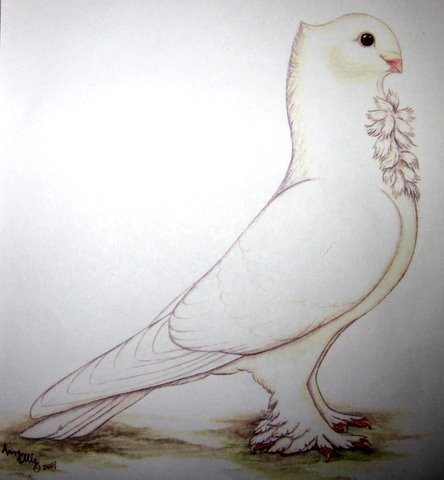
The 2009 Show Standard for a Seraph. Note the skull shape, the depth of the swoop, the arc of the skull, the depth and line of the mane, the downturn of the beak, and the prominence of the gullet. Compare to the new standard below.
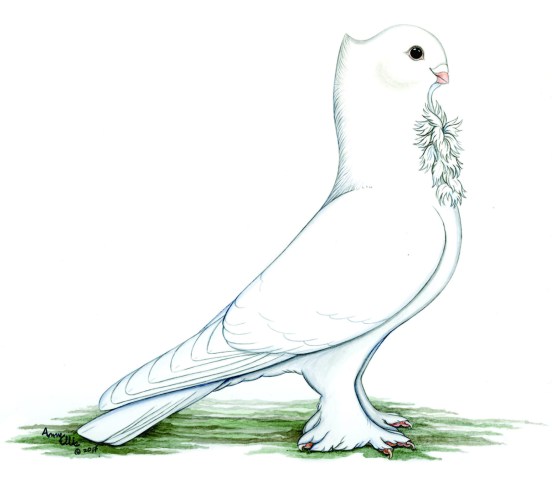
Anya Ellis’ depiction above of the ideal Seraph, 2017, is notable. The modern Seraph is structurally different than the Seraph of the 1990’s in significant ways, with changes particularly evident in the head. Seraphim primarily compete in the Show Hall as birds of structure, both of body and feather. The new painting demonstrates the upright posture and the long, flowing line demanded of Seraphim in the Show Hall. It also demonstrates the more deeply feathered mane, the deeper swoop leading to the needlepoint peak, and the unusually deep and full frill expected of today’s Seraph. The deeper swoop is the result of a combination of changes in feather and form – longer feathers in the mane and a rounder, larger skull with a higher arc in the top and back. The beak is definitely “down faced”. The gullet is readily apparent.
Carefully compare the new Standard to the “old” 2009 Standard above it and pay particular attention to all components of the head and neck. To the trained eye the changes are obvious even though subtle. This look is the new goal for Seraphim in the Show Hall from 2017 and on.
The 2017 Standard was in development after the SCI Club Show of 2013, at which time a long-range discussion was begun about the skull and the idea of the “apple-headed” Seraph, a trait highly desired but difficult to create. Discussion also surrounded the concept of the “frilly” Seraph vs. the “powerful” Seraph, i.e. what is the proper balance of feminine frilliness versus masculine physicality and power. The androgenous appearance of the Seraph is the result of the tension between the two selves – the masculinity of physical power, form, and stance and the femininity of long feather, frills, and softness. Ideally both sexes carry a perfect balance of masculinity and femininity. If the feminine frilliness and long feather is overpowering, the bird is beautiful but can look overly adorned; if the powerful masculine form is overpowering and the feathers are shorter and stouter, the feminine effect of the frilliness is lost, along with the androgyny the breed is expected to demonstrate. In Seraphim, artistic balance is paramount, and it should be very difficult to separate the sexes by appearance. A perfect Seraph should be a delight to the eye and should elicit an emotional response from the viewer. The bird should be a work of art that gives off an aura of delicate power.
David Coster, SCI Manager
 The Seraphim Club International
You must be logged in to post a comment.